


Nothing can spoil the beauty of a pond as witnessing fish gasping upon the surface, a fair indication that there is little or no oxygen left in the water.
You may find that your pond has poor aeration due to:
- Cloudy water
- Stench
- An outbreak of algae in the pond.
Luckily, though, through the proper tools and practices, you can resolve and maintain a healthy aquatic habitat.
Why Oxygen Matters in Ponds
The pond has oxygen as its lifeline, feeding the fish, plants, and healthy bacteria. Lack of it leads to sludge accumulation, algal dominance, and stressed fish or even death. Quality tools such as Evolution Aqua air pumps could make all the difference in keeping it aerated.
That Pond Guy is a well-known expert in the UK who always prefers to suggest such solutions, emphasizing how proper aeration prevents common pond problems while keeping fish healthy.
They provide:
- Useful tips for a natural way of doing everything.
- They suggest the use of both deep well and artificial aerations in combination with natural aerations.
Signs Your Pond Lacks Oxygen
- Fish gasping at the surface – A sure sign that oxygen levels are critically low.
- Foul odours – As oxygen is lacking, decaying organic matter emits toxins.
- Algae overgrowth – Grows in stagnant, oxygen-less water, cutting off the light to plants.
Common Causes of Low Oxygen
Some of the factors that make your pond oxygen-starved are:
- High temperatures – Fish metabolisms will become faster and warmer because the water contains less oxygen.
- Overcrowding – Many fish use oxygen at a rate that exceeds what plants and aeration can replenish.
- Excess food and debris – Decomposing rubbish and leaves produce sludge, which will remove more oxygen.
- Weak or missing aerators – Small or low-performance pumps do not run water adequately.
How to Boost Oxygen Levels
Correcting low oxygen need not be complex.
The following are some of the key solutions:
- Install an air pump – Equipment such as Evolution Aqua air pumps drives oxygen far beneath the water, enhancing circulation.
- Add water features – The surface is churned up (by fountains or waterfalls) to assist in the natural dissolving of oxygen.
- Use pond plants – Plant at least half the area to provide additional natural filtration and provide more oxygen.
- Reduce sludge – Keep moving decaying matter so that bacteria do not thrive on the oxygen
Pro Tips for Long-Term Maintenance
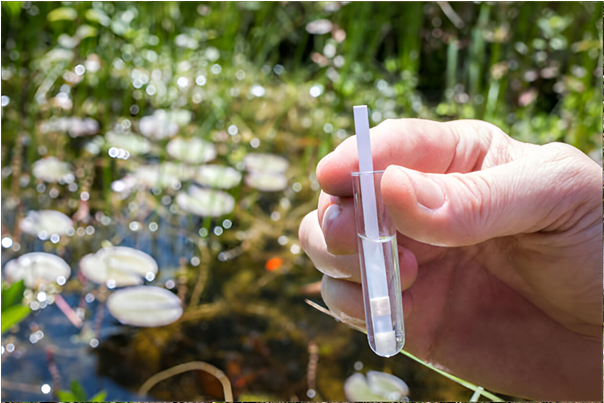
- Test oxygen levels regularly – Especially when the season changes, to catch drops early.
- Combine methods – Just depending only on plants or pumps may not be sufficient. Prefer to use both for consistent results.
- Shade your pond – Floating canopies or plants help keep the water temperature cool, thereby maintaining adequate oxygen levels.
Low oxygen does not mean disaster to your pond. A balanced, healthy ecosystem can be achieved with the correct solution, and perhaps with assistance from an expert like That Pond Guy, to maintain a clear body of water throughout the entire year.
Still need some help? Check out a few of their recommended aeration tools and keep your pond at its best!